
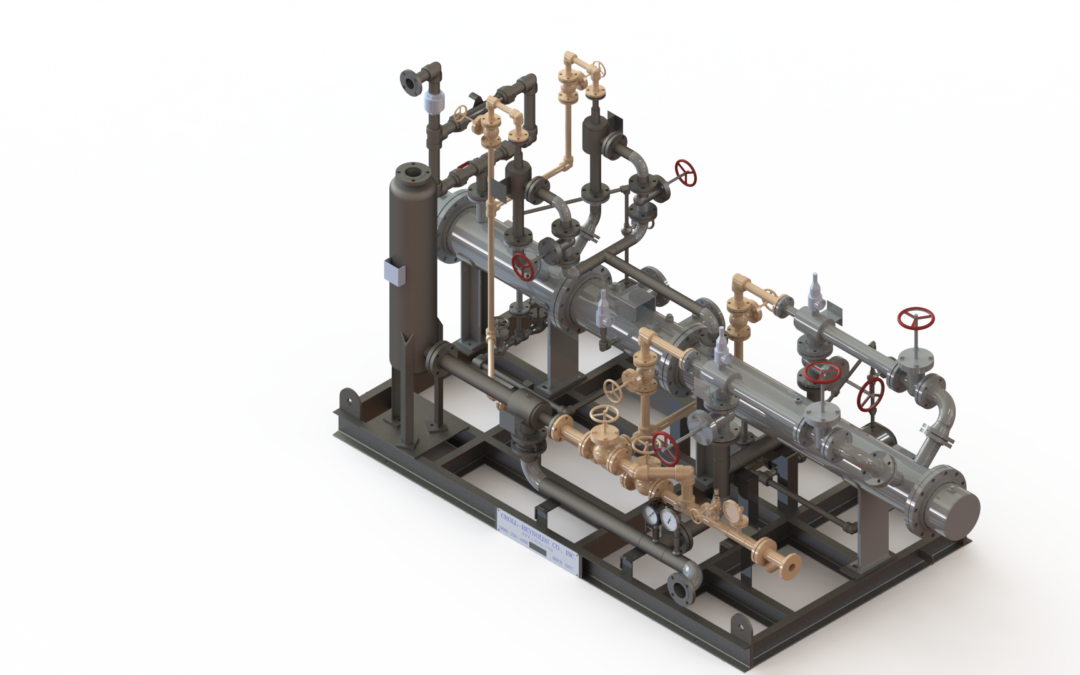
Chemical processing plants require dependable vacuum solutions to support critical operations such as distillation, drying, evaporation, and flash cooling. These processes often involve handling large volumes of gases, vapors, and condensable loads under demanding operating conditions. Unlike systems that rely on complex mechanical equipment, Steam Jet Ejector Vacuum Systems provide a reliable approach by using steam-driven technology to create and maintain vacuum conditions. Designed for industrial process requirements, Croll Reynolds develops vacuum solutions that help chemical manufacturers achieve consistent performance, reduced maintenance needs, and long-term operational reliability.
The Importance of Vacuum Systems in Chemical Processing
Vacuum plays an essential role in many chemical manufacturing operations by allowing processes to occur at controlled pressures and temperatures. Lower pressure conditions can reduce boiling points, improve separation efficiency, and enable safer handling of temperature-sensitive materials.
Processes such as product distillation require precise vacuum control to separate components effectively without exposing materials to excessive heat. Drying operations also benefit from vacuum conditions because moisture and solvents can be removed more efficiently at lower temperatures.
For chemical plants operating continuously, a reliable vacuum system is necessary to maintain stable production conditions and prevent interruptions that could affect product quality and efficiency.
How Steam Ejector Technology Creates Vacuum
Steam ejectors operate by converting the energy of high-pressure steam into a high-velocity flow through specially designed nozzles. This process is based on the relationship between fluid velocity and pressure.
As steam passes through a converging-diverging nozzle, its pressure energy is converted into kinetic energy, creating a high-speed steam jet with a low-pressure region. This localized low-pressure area draws in process gases and vapors through the suction inlet.
The steam and suction fluids then mix inside the ejector before moving through the diffuser. The diffuser reduces velocity and converts kinetic energy back into pressure energy, allowing the combined flow to move through the vacuum system.
This simple but highly engineered process enables efficient vacuum generation without the need for rotating machinery.
Handling High Volumes of Gas and Vapor Loads
Chemical plants frequently deal with large quantities of process vapors and gases during production. Vacuum equipment must be capable of handling changing loads while maintaining stable performance.
Steam ejector systems are designed to manage high-volume gas streams across different vacuum levels. Their ability to handle condensable vapors, liquids, and particulate-containing streams makes them suitable for challenging chemical applications.
Unlike some mechanical vacuum technologies that may experience performance limitations when exposed to difficult process conditions, ejector-based systems are built to handle demanding industrial environments.
Advantages of No Moving Parts Design
One of the primary reasons chemical industries rely on ejector technology is the absence of moving mechanical components.
Mechanical vacuum pumps often include rotating parts that require lubrication, replacement components, and regular maintenance. In contrast, steam ejectors operate using fluid dynamics, eliminating many mechanical wear concerns.
The no-moving-parts design provides several operational benefits:
- Reduced maintenance requirements.
- Improved system reliability.
- Lower risk of mechanical failure.
- Consistent vacuum performance.
- Longer equipment service life.
For chemical processing facilities where downtime can impact production schedules, equipment reliability is a major consideration.
Supporting Continuous Industrial Operations
Chemical manufacturing often requires uninterrupted operation over extended periods. Vacuum systems must maintain consistent performance while handling variations in process conditions.
Steam ejector systems are designed for continuous service and can be arranged in multiple stages to achieve the required vacuum level. Each stage works with condensers and additional ejectors to progressively compress and remove process vapors.
This staged approach allows the system to efficiently manage different pressure conditions while maintaining dependable vacuum performance throughout the process cycle.
Role of Condensers in Vacuum Performance
Condensers are an important part of many industrial vacuum systems because they help remove heat and condense vapors between ejector stages.
After the steam and process vapors leave an ejector stage, the mixture can be cooled and condensed before entering the next stage. This reduces the volume of gases that must be handled and improves the overall efficiency of the vacuum system.
The combination of ejectors and condensers allows chemical plants to achieve effective compression and reliable vacuum operation across a wide range of process requirements.
Material Flexibility for Chemical Applications
Chemical environments can involve corrosive substances, high temperatures, and aggressive process conditions. Equipment materials must therefore be selected carefully to ensure durability and compatibility.
Steam ejector vacuum systems can be constructed using various metals, alloys, and composite materials, including thermoplastic options such as PP, PTFE, and PVDF.
This flexibility allows engineers to select construction materials that meet specific chemical resistance and operational requirements, improving equipment longevity and reliability.
Lower Operating Complexity and Maintenance Requirements
Industrial facilities continuously evaluate equipment based on reliability, maintenance demands, and lifecycle costs. Systems with simpler designs often provide advantages in long-term operation.
Steam ejector technology reduces operational complexity because it does not depend on complex mechanical assemblies. Installation, maintenance, and upgrades can often be managed more easily compared with systems requiring extensive mechanical servicing.
The ability to retrofit or upgrade existing vacuum systems also provides flexibility for plants looking to improve performance without completely redesigning their process infrastructure.
Conclusion
Chemical processing plants depend on reliable vacuum technology to support essential operations including distillation, drying, flash cooling, and vapor handling. Steam Jet Ejector Vacuum Systems provide an effective solution by using steam-driven fluid dynamics to generate vacuum without moving parts while handling high-volume gas and vapor loads. With extensive experience in industrial vacuum engineering, Croll Reynolds delivers customized systems designed for reliability, durability, and consistent process performance across demanding chemical applications.