
Car side mirrors play an essential role in road safety by helping drivers monitor surrounding traffic, change lanes confidently, and park with greater visibility. When a side mirror becomes cracked, damaged, or completely broken, choosing the correct replacement is important. However, replacing a mirror involves more than finding one that looks similar to the original. The replacement should also match the vehicle’s existing features, electrical connections, and mounting requirements.
Understanding the key factors involved in selecting replacement side mirrors can help vehicle owners avoid compatibility issues and maintain their car’s original functionality.
Check Your Vehicle’s Make, Model, and Year
The first step in choosing a compatible side mirror is identifying your vehicle’s exact make, model, and manufacturing year. Even vehicles from the same manufacturer can have different mirror designs, mounting points, and electrical configurations.
For example, two versions of the same vehicle model may use different mirror assemblies depending on their production year or trim level. Checking these details before ordering a replacement helps narrow down the available options and reduces the risk of purchasing an incompatible part.
Vehicle identification details can also help suppliers determine which mirror assembly is appropriate for your car.
Match the Original Mirror’s Electrical Features
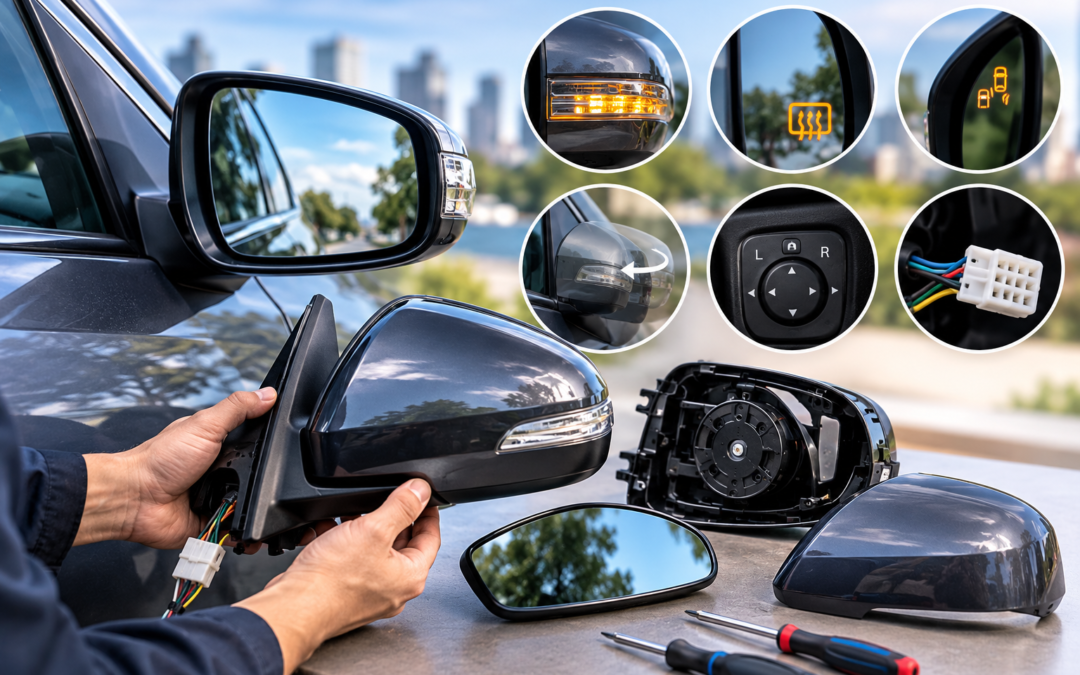
Modern side mirrors often include electrical features that improve convenience and driving safety. Before selecting a replacement, check which functions are fitted to your original mirror.
Common features include:
- Electric adjustment: Allows drivers to change the mirror position using interior controls.
- Heated mirror glass: Helps clear condensation and improve visibility in suitable weather conditions.
- Power folding: Enables the mirror to fold electronically when required.
- Blind-spot indicators: Provide visual warnings to help drivers identify vehicles in adjacent lanes.
- Integrated turn signals: Incorporate indicator lights into the mirror housing.
- Memory settings: Store preferred mirror positions in compatible vehicles.
A replacement mirror should support the functions originally fitted to the vehicle. Choosing a basic manual mirror when the car uses an electrically adjustable assembly, for instance, could result in lost functionality or additional compatibility problems.
Choose the Correct Mirror Glass
Mirror glass is another important consideration. Replacement glass must have the correct dimensions, shape, curvature, and mounting arrangement to fit the existing housing.
Some vehicles use flat glass, while others use convex glass to provide a wider field of view. Certain models may also feature heated glass or blind-spot sections.
Selecting the wrong glass can affect visibility, fitment, and the operation of integrated features. Before purchasing, check whether you need glass only or a complete mirror assembly.
If the housing, mounting bracket, and electrical components remain in good condition, replacing only the glass may be a practical option. More extensive damage may require a complete assembly.
Consider the Mirror Housing and Mounting Points
The mirror housing protects internal components and provides the structure that holds the glass and adjustment mechanism. Replacement housings should match the original design, mounting points, and attachment system.
Differences in the number or position of mounting bolts, connector locations, and housing dimensions can prevent a replacement from fitting correctly.
It is also worth checking the housing finish. Some vehicles have textured black mirror covers, while others use body-coloured or specially finished components. Choosing the correct style helps maintain the vehicle’s original appearance.
Where the mirror cover is damaged but the internal assembly remains functional, replacing only the cover may be sufficient.
Verify Electrical Connectors and Wiring
Electrical compatibility is especially important for vehicles equipped with advanced mirror functions. Replacement mirrors may look identical externally but use different wiring connectors or pin configurations.
Before installation, confirm that the replacement has compatible connectors and supports the vehicle’s original electrical functions. Incorrect connections can prevent adjustment motors, heating elements, folding mechanisms, or indicator lights from operating properly.
Professional assistance can be useful when identifying complex mirror assemblies, particularly on newer vehicles with integrated electronics.
Decide Between Glass Replacement and a Complete Assembly
The extent of the damage should guide your replacement decision.
If only the glass is cracked or broken, and the housing and adjustment mechanism are undamaged, glass replacement may be sufficient. If the mirror has a broken mounting bracket, damaged housing, faulty motor, or malfunctioning electrical components, replacing the complete assembly may be more appropriate.
A careful inspection can help determine which option offers the best balance of cost, compatibility, and long-term reliability.
Avoid replacing the entire assembly unnecessarily, but do not overlook hidden damage that could affect the mirror’s stability or operation.
Consider Professional Installation
Even when the correct replacement part has been selected, proper installation remains important. Incorrect fitting can result in loose components, damaged wiring, poor mirror positioning, or malfunctioning electrical features.
A qualified technician can check the mounting points, connect electrical components, adjust the mirror, and verify that its functions operate as expected.
Mobile mirror replacement services can also offer added convenience by allowing eligible repairs to be completed at your home or workplace, depending on service availability.
Choose a Reliable Replacement Supplier
Selecting a suitable supplier can make the replacement process easier. Look for a provider that can identify compatible parts based on your vehicle’s make, model, year, and original mirror specifications.
Before confirming an order, ask about the mirror’s included features, connector compatibility, warranty conditions, and whether installation is available.
Providing a clear photograph of the damaged mirror and its mounting area, along with accurate vehicle details, can help the supplier identify the appropriate replacement more efficiently.
Conclusion
Matching replacement side mirrors with original car features requires attention to more than appearance. Vehicle specifications, mirror glass, electrical functions, housing design, and mounting compatibility all influence whether a replacement will fit and perform correctly.
By checking these details before purchasing, vehicle owners can avoid unnecessary expenses, preserve important mirror functions, and maintain safe visibility on the road. When compatibility is uncertain, consulting an experienced mirror replacement specialist can help ensure that the selected part meets the vehicle’s requirements.
For drivers seeking assistance with compatible replacement mirrors, Car Side Mirrors Australia provides car mirror repair and replacement services across major Australian cities. Checking your vehicle details and original mirror features before arranging a replacement is a useful first step towards finding the right solution.