
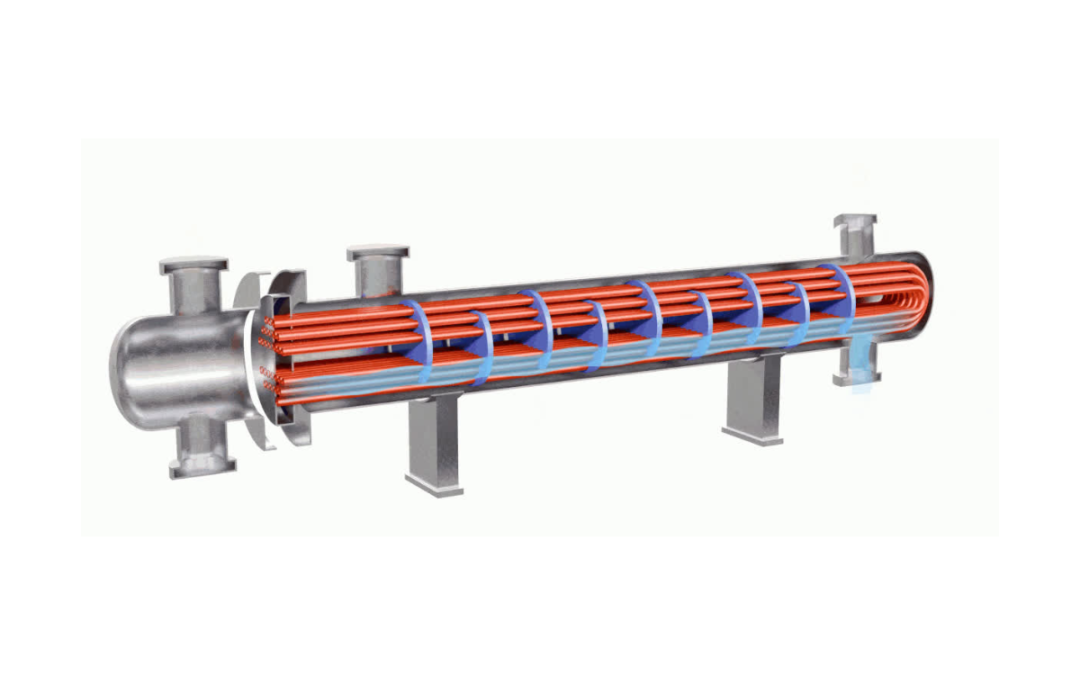
Heat exchangers play an important role in many industrial processes by transferring heat between two fluids while keeping them physically separated. They are widely used in chemical processing, refining, power generation, manufacturing, and other industries where controlling process temperatures is essential. Among the various designs available, a shell and tube heat exchanger remains one of the most widely used solutions because of its flexibility, durability, and ability to handle demanding operating conditions.
When selecting equipment for an industrial application, engineers need to consider factors such as temperature, pressure, materials, fluid characteristics, heat-transfer requirements, and maintenance needs. This is where industry standards can provide an important framework. TEMA heat exchangers are designed around standards established by the Tubular Exchanger Manufacturers Association (TEMA), which provides widely recognized guidelines for the design and construction of tubular heat exchangers.
What Are TEMA Heat Exchangers?
The term TEMA heat exchangers generally refers to shell-and-tube heat exchangers designed and manufactured according to TEMA standards. These standards provide guidelines covering important aspects of exchanger construction, including mechanical design, fabrication, inspection, and performance considerations.
TEMA classifications also help engineers and equipment users identify different exchanger configurations. Rather than treating every heat exchanger as the same, the standards provide a structured way to specify designs based on the requirements of an application.
For industries operating under demanding conditions, following recognized design standards can help create consistency in equipment specification and manufacturing. However, the appropriate exchanger configuration still depends on the individual process and operating environment.
Understanding Shell-and-Tube Heat Exchanger Designs
A shell and tube heat exchanger consists primarily of a bundle of tubes enclosed within a larger cylindrical shell. One fluid flows through the tubes while another flows around the outside of the tubes within the shell. Heat moves through the tube walls from the hotter fluid to the cooler fluid without the two fluids directly mixing.
The basic concept is relatively straightforward, but shell-and-tube exchangers can be configured in many different ways. Tube arrangement, shell design, flow direction, materials, and construction details can all be adapted to meet specific process requirements.
Common configurations include fixed-tube-sheet, U-tube, and floating-head designs. Each arrangement offers different characteristics related to thermal performance, maintenance, cleaning, and the ability to accommodate thermal expansion.
Why TEMA Standards Matter
Industrial heat exchangers can operate under significant temperature and pressure conditions. For this reason, consistent engineering and manufacturing practices are important when designing equipment for process applications.
TEMA standards provide guidance for many mechanical aspects of tubular heat exchanger construction. They can help engineers communicate design requirements more clearly with manufacturers and provide a common reference when specifying equipment.
For example, thermal expansion can become an important consideration when the shell and tubes experience different temperatures. Certain exchanger configurations provide greater flexibility for accommodating this movement. Similarly, applications involving fluids that can cause fouling may require a design that allows easier access for inspection and cleaning.
Using recognized standards does not eliminate the need for application-specific engineering. Instead, standards provide a foundation that engineers can use alongside process calculations, material selection, operating conditions, and other design requirements.
Choosing the Right Exchanger Configuration
Selecting an exchanger should begin with understanding the process rather than simply choosing a standard equipment configuration. The temperatures and pressures of both fluids are important, as are their flow rates, viscosity, corrosiveness, and tendency to create deposits on heat-transfer surfaces.
Maintenance requirements should also be considered. Some processes require regular tube cleaning or inspection, making accessibility an important part of the equipment selection process.
Another consideration is thermal expansion. When there is a significant temperature difference between the shell and tube bundle, the equipment must be designed to accommodate the resulting movement. The exchanger configuration can influence how effectively these stresses are managed.
Material selection is equally important. The materials used for tubes, shells, and other components need to be compatible with the fluids and operating conditions. Choosing unsuitable materials can contribute to corrosion, reduced service life, or maintenance problems.
Applications of TEMA Heat Exchangers
TEMA-based shell-and-tube designs are used across numerous industries. Chemical processing facilities use heat exchangers for heating, cooling, condensation, and other process requirements. Refineries rely on heat-transfer equipment throughout different stages of petroleum processing.
They are also used in power generation, petrochemical processing, food processing, and general industrial applications. Depending on the process, a heat exchanger may be required to heat a process fluid, cool equipment streams, condense vapor, or recover useful heat from another process stream.
This versatility is one reason shell-and-tube technology continues to be important in industrial facilities.
Performance and Maintenance Considerations
Proper design is only one part of achieving reliable heat exchanger performance. Operating conditions and maintenance practices can also affect efficiency over time.
Fouling, scaling, corrosion, and deposits can reduce heat-transfer performance and increase pressure drop. Regular inspection and appropriate cleaning procedures can help identify potential problems before they significantly affect process performance.
Engineers may also monitor temperature differences, pressure drop, flow conditions, and other operating parameters to identify changes in exchanger performance. These measurements can provide useful information about the condition of the equipment and help determine when maintenance may be necessary.
Final Thoughts
Understanding TEMA standards and the different shell-and-tube configurations can help engineers and industrial operators make more informed decisions when specifying heat-transfer equipment. The right design depends on the process, operating conditions, maintenance requirements, materials, and desired thermal performance. Companies such as Croll Reynolds provide engineered heat-transfer solutions for demanding industrial applications, helping industries address their specific process requirements with appropriately designed equipment.