
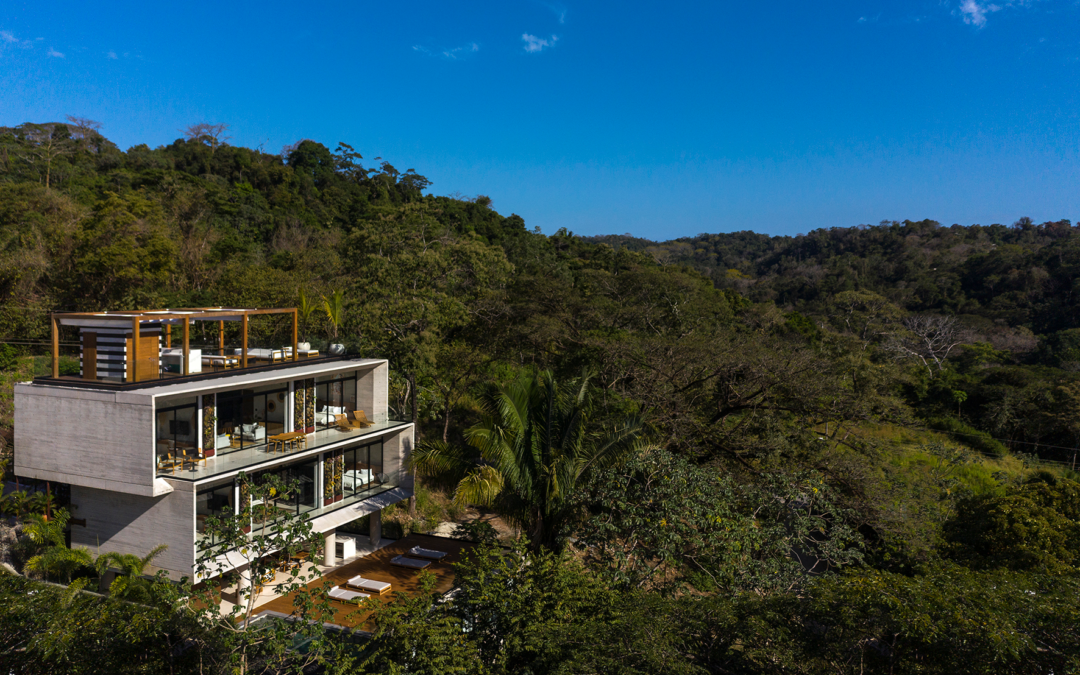
Before a building occupies a site, the land is already telling a story. The slope of the terrain, the movement of water, the shade cast by existing trees, the direction of the wind, and the habitats woven through the landscape all form a living framework. Good design begins by listening to these conditions rather than treating them as obstacles to overcome. This is where land planning Costa Rica can move beyond conventional development strategies and become an opportunity to create a deeper relationship between architecture and place. At Voidcr, this understanding informs a holistic approach in which buildings, landscapes, and existing natural ecosystems are considered together from the earliest stages of a project.
Starting With the Existing Landscape
Every site has its own identity. Topography, vegetation, drainage patterns, soil conditions, sunlight, wind, and existing habitats can influence how a project should evolve. Understanding these characteristics before establishing a development strategy creates an opportunity to work with the site rather than impose an unrelated structure upon it. This begins with careful site observation and analysis. Existing trees may inform building locations and outdoor spaces. Natural slopes can influence circulation and building orientation. Water movement can help determine where intervention is appropriate and where natural systems should remain undisturbed. The objective is not simply to preserve every existing element. Instead, it is to understand which characteristics give the site ecological, spatial, or experiential value and allow them to become part of the design strategy.
Connecting Land Strategy with Architecture
Architecture becomes more responsive when its relationship with the land is considered from the beginning. Building placement, orientation, massing, access, and circulation can all emerge from an understanding of the site’s conditions. For example, rather than creating extensive grading to establish a uniform platform, a project may respond to the existing contours. Buildings can be positioned to follow the terrain, reduce unnecessary disturbance, and create changing relationships with views, vegetation, and outdoor spaces. This approach can also influence the experience of moving through a project. Arrival routes, courtyards, terraces, shaded areas, and transitional spaces can connect built areas with the surrounding landscape. Architecture therefore becomes part of a larger spatial sequence rather than an isolated object placed on a site.
Making Landscape an Integral Part of the Project
Landscape design is often most effective when it is developed alongside architecture rather than added after buildings have been designed. When the two disciplines are coordinated early, planting, outdoor circulation, water management, and architectural spaces can reinforce one another. Existing vegetation can provide shade, define boundaries, frame views, and create a sense of continuity across a property. New planting can complement these systems while responding to local environmental conditions. Outdoor areas can become extensions of interior spaces, allowing people to experience changes in light, temperature, vegetation, and atmosphere throughout the day.
Working With Natural Water Systems
Water is another important component of an integrated site strategy. Rainfall, runoff, drainage patterns, and natural watercourses can significantly influence development. A thoughtful approach begins by understanding how water already moves across the property. This information can inform the placement of buildings, paths, planted areas, and other interventions. Strategies for retaining, filtering, directing, or slowing water can then become part of the overall landscape and site design. Such measures can contribute to a healthier relationship between development and the site’s natural processes. They can also reduce the need to rely exclusively on engineered solutions when the landscape itself can perform some of these functions.
Protecting Ecological Continuity
Natural ecosystems rarely follow property boundaries. Vegetation, wildlife, water, and other ecological processes operate across larger territories. Planning therefore benefits from considering the site’s relationship with its surrounding environment. Maintaining existing vegetation corridors, protecting sensitive areas, and minimizing unnecessary fragmentation can help retain ecological connections. Development can then occupy the site more selectively, leaving meaningful areas of the landscape intact. This approach also creates opportunities for people to experience nature as part of everyday life. Paths, gardens, open spaces, and architectural thresholds can provide moments of connection without requiring the landscape to be overly controlled.
Creating a More Cohesive Development
The integration of architecture, landscape, and natural ecosystems ultimately changes the way a project is conceived. Instead of separate decisions being made by different disciplines at different stages, the site can become the common framework connecting them. Land strategy can influence architecture. Architecture can shape landscape experiences. Landscape can support ecological functions. Together, these elements can create a project that feels more coherent because its different components respond to the same underlying conditions. This is particularly valuable for residential, hospitality, wellness, and other developments where the relationship between people and place is central to the experience.
Conclusion
Effective land planning Costa Rica requires an understanding of the territory beyond the simple allocation of building areas. By studying existing ecosystems, responding to topography and water, integrating landscape with architecture, and protecting meaningful ecological connections, development can become more responsive to its setting. Voidcr approaches this relationship through a holistic design perspective, recognizing that the most meaningful projects can emerge when architecture and landscape are developed as part of the living systems that already exist on the land.