
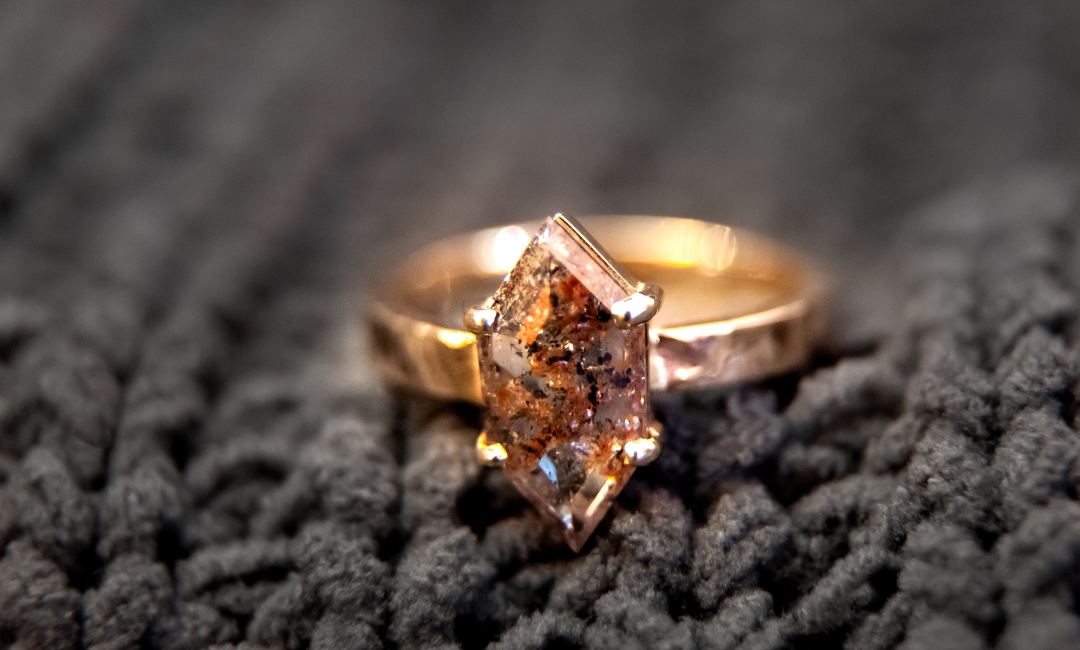
Diamonds are often judged according to traditional expectations of clarity and brilliance, but not every diamond is chosen for a perfectly clear appearance. Some couples are increasingly interested in stones that reveal natural internal characteristics and unusual color patterns. A salt pepper diamond is one example, offering a distinctive appearance created by a combination of light and dark inclusions.
What Is a Salt Pepper Diamond?
The term salt and pepper diamond generally refers to a diamond containing visible inclusions that create a combination of lighter and darker marks within the stone. These characteristics can give the diamond a speckled, smoky, or peppered appearance.
Unlike traditional diamonds where high clarity is often emphasized, salt and pepper stones are appreciated partly because their internal characteristics contribute to their visual identity.
Understanding Inclusions
Inclusions are internal characteristics formed during a diamond’s natural development. In many traditional diamond-selection processes, fewer visible inclusions are considered desirable.
With salt and pepper diamonds, however, inclusions are often an important part of the stone’s appearance. They can create unique patterns that make one stone visually different from another.
Color Can Vary Considerably
Not every salt and pepper diamond has the same appearance. Some may have a mostly light body with scattered dark inclusions, while others can appear much darker overall.
The balance between transparent areas, gray tones, black inclusions, and other natural characteristics contributes to the individuality of each stone.
Cut Still Matters
The cut of a salt and pepper diamond influences how its internal characteristics are displayed. Certain cuts may emphasize the stone’s pattern and overall silhouette.
Popular shapes can include oval, pear, round, elongated, and geometric forms. The right choice depends on whether the wearer wants the inclusions, shape, or overall composition to become the main visual feature.
Why Individual Character Matters
One of the strongest appeals of these diamonds is that no two stones necessarily have exactly the same internal pattern. Instead of seeking uniformity, buyers can look for a stone whose natural characteristics appeal to them personally.
This makes the selection process more subjective and personal than simply comparing traditional grading characteristics.
Choosing a Setting
The setting should complement the diamond’s appearance. A simple setting can keep attention focused on the stone, while a more detailed setting can add additional texture and contrast.
Metal color also matters. Yellow gold can create a warm contrast, while white metals can produce a sharper appearance. Rose gold can add another layer of warmth.
Consider the Overall Design
A salt and pepper diamond can work particularly well in alternative bridal jewelry. Geometric settings, asymmetrical bands, unusual proportions, and mixed metals can emphasize the stone’s naturally unconventional character.
The design does not need to be complicated. Sometimes a simple setting provides the best background for a distinctive gemstone.
Finding a Stone That Feels Personal
For couples who value unusual gemstones and individual design, Midwinter Co. offers an approach to bridal jewelry that moves beyond conventional diamond aesthetics.
When selecting a stone, it can be useful to compare several examples rather than expecting one standardized appearance. Looking at the stone in person or through detailed imagery can help reveal differences in color, pattern, and overall character.
Final Thoughts
A salt pepper diamond offers a different perspective on what makes a diamond beautiful. Its visible inclusions, varied color, and individual patterns can become defining characteristics rather than imperfections to hide. By considering the stone’s appearance, cut, setting, metal, and personal preferences together, couples can choose a diamond that feels distinctive and meaningful.