
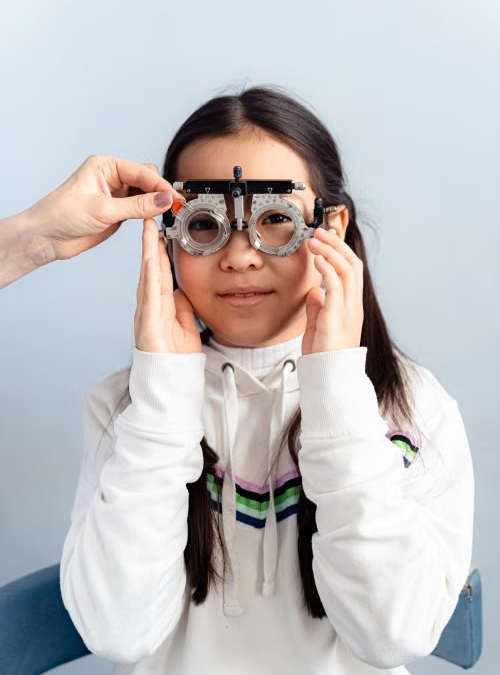
Children do not always know when something is wrong with their vision, especially when they have never experienced clear sight differently. A child may read, play, use digital devices, and participate in school activities without complaining about vision problems. However, seeing clearly does not always mean that their eyes are developing normally or working efficiently together. A Childrens Eye Exam Brampton can help assess vision and identify concerns that may not be obvious at home. Regular professional evaluation can be particularly useful when parents notice changes in reading habits, screen use, concentration, or visual comfort. Understanding why children may need eye care even when they appear to see well can help parents make informed decisions about their child’s vision.
Clear Vision Does Not Tell the Whole Story
Children often adapt quickly to small changes in their vision. If one eye sees slightly differently from the other, for example, a child may not recognize that anything is unusual. They may simply continue using the stronger eye more effectively. Because children may assume that their vision is normal, they may not report a problem unless it becomes noticeable.
An examination looks beyond whether a child can identify letters or objects from a particular distance. It can provide a broader assessment of how the eyes are functioning and how vision is developing. This is important because some visual concerns may exist without causing obvious day-to-day symptoms. Parents should therefore avoid relying only on whether their child says they can see clearly.
Children May Not Recognize Vision Changes
Adults can usually describe blurred vision, headaches, eye discomfort, or difficulty focusing. Younger children may have more difficulty explaining these experiences. Instead, a vision-related issue may appear as a change in behavior.
A child who frequently moves closer to books, loses their place while reading, avoids certain activities, or becomes tired during visually demanding tasks may be experiencing a visual challenge. These signs do not automatically mean that an eye problem is present, but they can be useful reasons to discuss the child’s vision with an eye-care professional.
This is one reason parents may consider an Eye Exam Brampton even when their child has not directly complained about seeing poorly.
Eye Development Can Change as Children Grow
Children’s eyes and visual systems continue developing throughout childhood. Vision needs can therefore change as children grow, begin school, increase their reading demands, or spend more time using digital devices.
A child who had no noticeable concerns previously may develop a refractive change later. Regular professional assessments can help parents understand whether their child’s vision remains appropriate for their current stage of development.
The goal is not simply to determine whether a child needs glasses. A professional examination can provide information about vision and help identify whether further attention may be appropriate based on the child’s individual needs.
Reading and Schoolwork Can Reveal Visual Challenges
School activities require children to use their vision for extended periods. Reading, writing, copying information from a board, completing worksheets, and using computers all place different demands on the visual system.
Some children may manage these tasks despite having a visual difficulty, but they may show subtle changes in behavior. They might avoid reading, become restless during homework, frequently lose their place, or need more breaks than expected.
Parents and teachers may notice these changes before the child understands what is happening. If school-related visual habits change, discussing them during an eye examination can help provide a clearer picture of the child’s visual needs.
Comprehensive Eye Exams Can Look Beyond Basic Vision
A basic vision check and a professional examination are not necessarily the same thing. A Comprehensive Eye Exams in Brampton appointment can provide a more detailed assessment of a child’s visual function and eye health.
Depending on the child’s age and individual needs, an optometric examination may consider factors such as visual acuity, refractive needs, eye coordination, focusing ability, and overall eye health. The specific tests used can vary according to the child’s age and circumstances.
This broader approach is useful because a child can perform well on a simple distance vision test while still having other visual concerns that deserve attention.
Children Who Use Screens Still Need Healthy Visual Habits
Digital devices are now a regular part of many children’s daily routines. Tablets, computers, smartphones, and other screens can increase the amount of time children spend focusing at close distances.
Extended screen use does not automatically mean that a child has an eye condition, but parents may notice complaints of tired eyes, discomfort, difficulty maintaining attention, or changes in viewing distance. Encouraging regular breaks and appropriate viewing habits can support visual comfort.
If a child frequently experiences discomfort while using screens or completing close-up work, parents can mention these observations during an eye examination. The information may help the optometrist understand the child’s everyday visual demands.
Family History Can Also Be Relevant
Parents may sometimes assume that an eye examination is unnecessary because their child has no symptoms. However, family history can be one factor worth discussing during an appointment.
Certain vision and eye-health concerns may occur more frequently within families. Sharing relevant family information with an eye-care professional can help provide additional context when assessing a child’s vision.
Parents do not need to diagnose anything themselves. Instead, they can provide information about family eye history, the child’s habits, school performance, and any changes they have noticed. These details can help create a more complete picture during the examination.
An Optometrist Can Help Identify Subtle Concerns
An Optometrist Brampton can assess a child’s vision using age-appropriate methods rather than relying only on the child’s ability to describe symptoms. This can be particularly helpful with younger children who may not have the vocabulary to explain visual discomfort or difficulty.
Parents can also share observations about reading, homework, sports, screen use, or other activities. Even small details may be useful when considering the child’s overall visual needs.
The purpose of an examination is not to assume that a problem exists. It is to assess the child’s vision and eye health and provide appropriate guidance based on what is found.
When Parents Should Pay Closer Attention
Even children who generally see well may show signs that deserve discussion. Parents can pay attention to behaviors such as frequent squinting, holding reading material unusually close, sitting very close to screens, covering one eye, frequent eye rubbing, avoiding close-up activities, or experiencing recurring visual discomfort.
These behaviors can have different causes, and none of them alone confirms an eye condition. However, persistent or unusual changes can be useful information to share with an eye-care professional.
Parents should also pay attention when a child suddenly changes their normal visual habits. A noticeable change may be more important than whether the child currently says they can see clearly.
Eye Exams Can Support Changing Visual Needs
Children’s visual demands can change significantly as they move from early childhood into school years and adolescence. A young child may have different visual requirements from a teenager who spends several hours reading, studying, gaming, or using a computer.
An examination provides an opportunity to assess whether the child’s current vision is suitable for those changing demands. If glasses, contact lenses, visual recommendations, or additional monitoring are appropriate, parents can discuss these options with the optometrist.
Regular eye care can therefore be part of maintaining awareness of a child’s changing vision rather than something reserved only for situations where a child reports blurred sight.
Making Children’s Eye Care Part of Routine Health Care
Parents often schedule dental visits, physical checkups, and other routine appointments even when their children appear healthy. Vision can be approached in a similar way. Waiting for a child to complain may mean overlooking concerns that the child has not recognized or cannot describe.
A professional eye examination can give parents useful information about their child’s current vision and eye health. It can also provide an opportunity to discuss concerns related to schoolwork, screens, reading, sports, or family eye history.
For families looking for local brampton eye care, choosing an eye-care provider familiar with children’s visual needs can make it easier to keep track of changes as a child grows.
Final Thoughts
Clear vision is an important part of childhood, but it is not the only reason to consider an eye examination. Children may adapt to visual differences, have difficulty describing symptoms, or show subtle behavioral changes rather than directly reporting a problem. A professional examination can provide a broader assessment of vision and eye health while helping parents understand their child’s changing visual needs. Paying attention to reading habits, screen use, school activities, and unusual visual behaviors can also provide useful information. For families in the area, Drs. J&K Gill & Associates can provide professional guidance when parents want to better understand their child’s vision and determine whether an examination is appropriate.